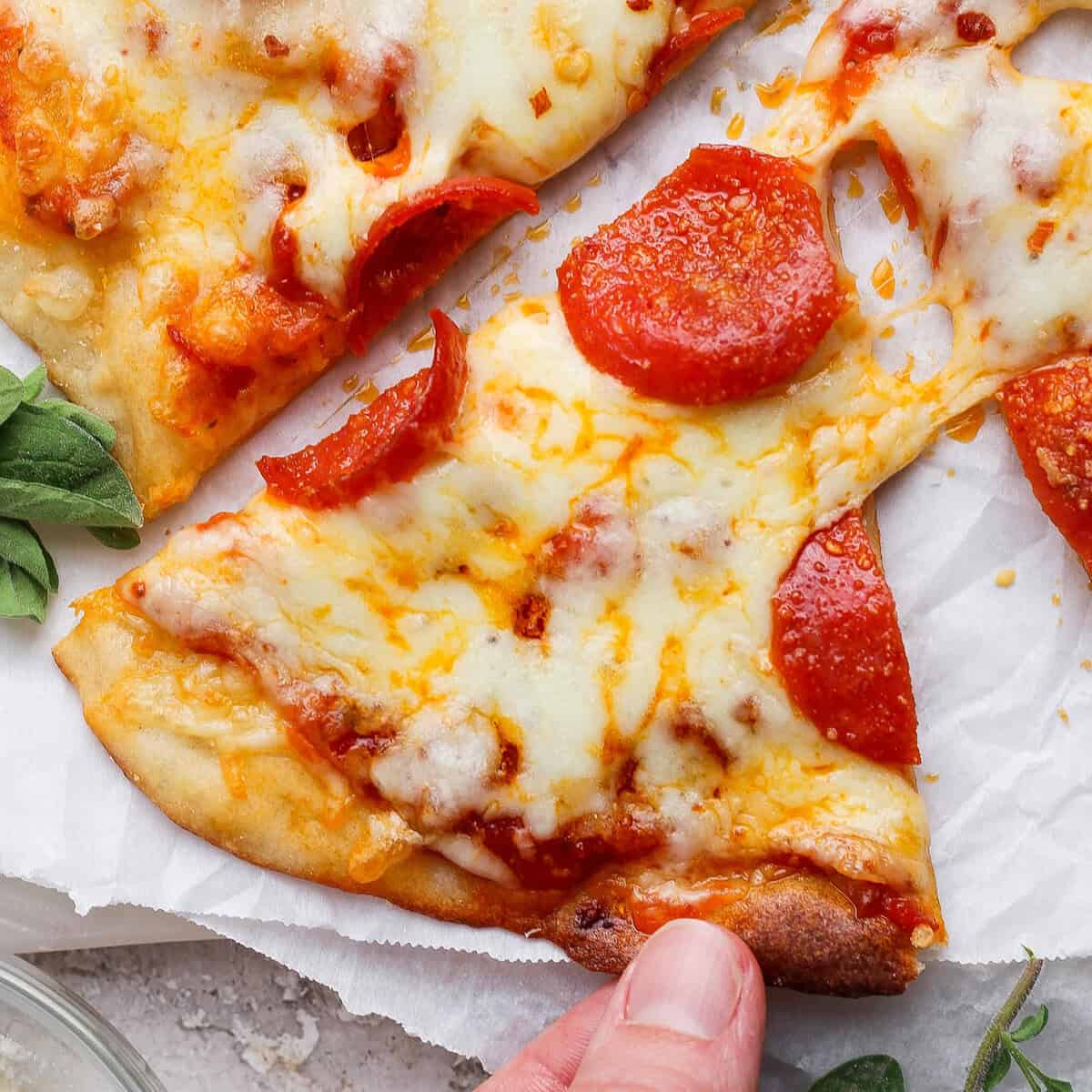
As a woman married to a pizza connoisseur, I’ve been on a mission to find ways to amp up the protein on this beloved staple. Turns out, there’s magic in cottage cheese. Blended smooth, it adds moisture and structure to pizza dough, and about 20 grams of protein per serving!
An added perk of this high-protein pizza base is the no-rise dough. It skips yeast entirely, and still bakes up crispy, chewy, and fast enough to make for a hungry toddler. That’s what makes it a favorite for busy weeknights and anytime I want pizza now, not later.
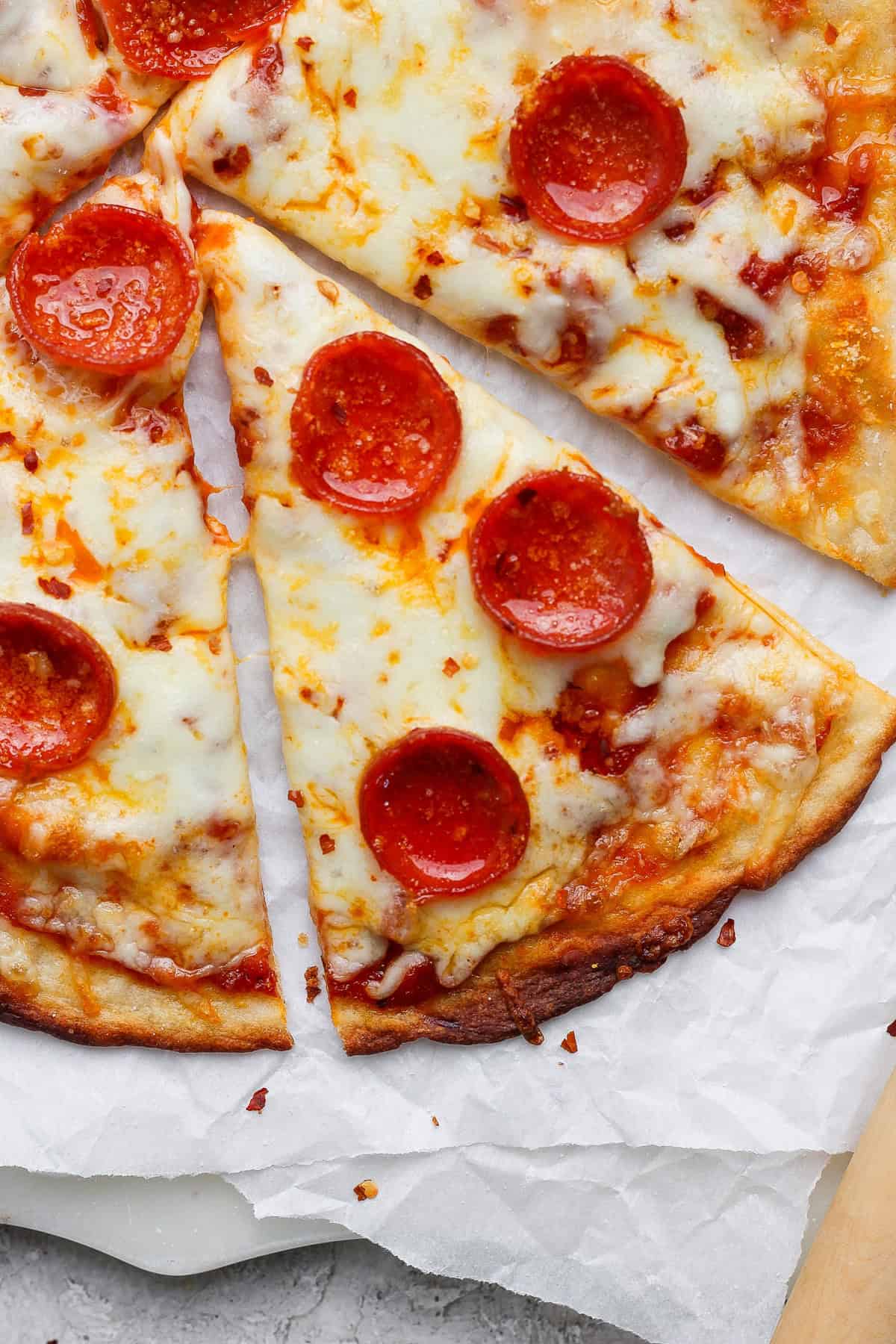
“Wow, this was DELICIOUS! Doubled the recipe for two pizzas (both with blended cottage cheese). Felt indulgent. Loved the crispy crust and slight tang. Will definitely be on the rotation.”
– Emily R.
“Love this healthy and easy pizza crust! I made the Greek yogurt version and loved the texture and flavor. Topped it with sauce, mozzarella, and balsamic roasted veggies I had hanging in the fridge. Delicious!”
– Adrienne
How to Get the Perfect No-Rise Pizza Crust
The single most important tip for this high-protein dough is rolling it thin. Aim for about ⅛ inch thick, even if it feels thinner than you’re used to. A thin crust is what gives those crisp edges and prevents the center from getting doughy.
I also make sure the dough feels dry to the touch before rolling. If it sticks, I dust my work surface and rolling pin with more flour as I go. Because there’s no rise time, the texture you create before baking is exactly what you’ll get in the oven, so a little extra care here makes all the difference.
Ingredients You’ll Need
This dough uses simple pantry staples, but each one plays an important role in the final texture and flavor:
- All-purpose flour: This creates a nice balance of chew and crisp. I haven’t tested gluten-free flour, coconut flour, or almond flour, and don’t recommend self-rising flour alongside baking powder. Whole wheat flour may work, but expect a denser crust.
- Baking powder: Since there’s no yeast, this is what gives the dough a bit of lift and keeps it from baking up flat. Don’t skip it!
- Sea salt: Salt is essential for flavor. Add garlic powder, oregano, Italian seasoning, or other dried herbs for a more seasoned crust.
- Cottage cheese: Use blended cottage cheese for a smooth dough and protein boost. Both low-fat and full-fat work, though full-fat will give a slightly richer texture. Small or large curd is fine as long as it’s fully blended. There’s no need to drain it first.
Cottage cheese is what makes this pizza dough special. Once blended, it melts seamlessly into the dough, adding protein, moisture, and structure without the need for oil or yeast. The result is a crust that’s chewy on the inside, crisp on the edges, and sturdy enough to hold toppings.
I’ve tested this dough as Skyr pizza and with Greek yogurt, and both work beautifully. Yogurt creates a slightly thinner, more classic pizza crust with crisp edges, while cottage cheese produces a chewier texture and a bit more puff.
How to Make the Dough
Making this protein pizza dough is refreshingly simple, but a few small details make a big difference in how the crust turns out. Here’s a step-by-step overview with tips to help get that crispy, chewy texture just right:
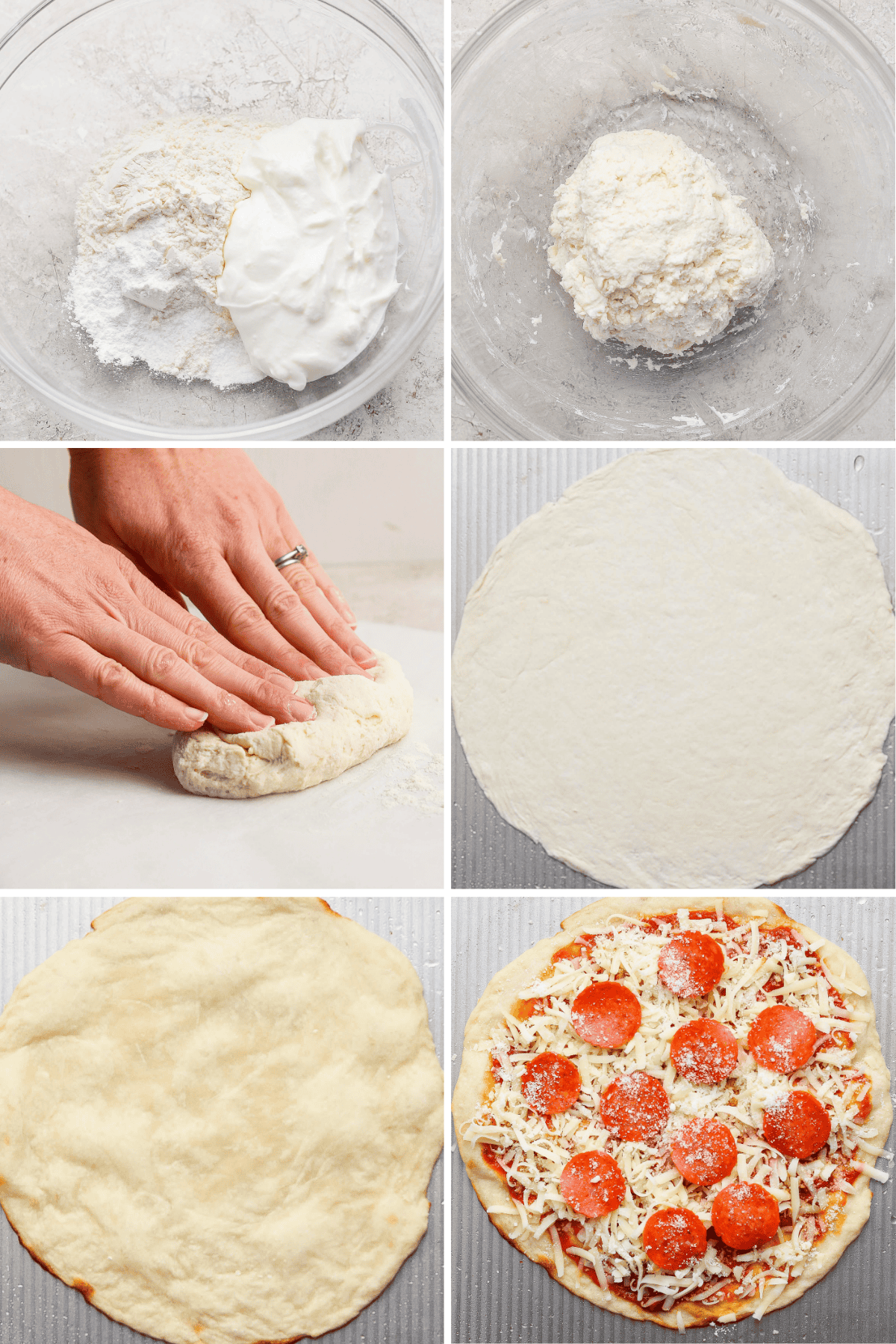
- Mix the dough. Stir the flour, baking powder, salt, and cottage cheese (or yogurt) together until a dough forms. It might look a little rough at first, but that’s normal. Once it comes together, switch to using your hands to gently press it into a ball.
- Knead until smooth. Turn the dough out onto a floured surface and knead just until it feels smooth and no longer sticky. If the dough is sticking to my hands or the counter, I sprinkle in a bit more flour. It needs to be dry enough to roll, not wet or tacky.
- Roll it very thin. This is the most important step. Roll the dough as thin as possible, aiming for an even thickness throughout. A thinner crust means crispier results, while thicker spots tend to stay soft or doughy in the center. That’s not a good thing!
- Parbake the crust. Bake the crust on its own before adding toppings. This helps set the structure and prevents a soggy middle once the sauce and cheese go on. It’s ready when it looks dry on top and just barely starts to firm up.
- Add toppings and finish baking. After parbaking, add the sauce and toppings, then return the pizza to the oven. Keep an eye on the bottom of the crust during this stage. A light golden brown color is the cue that it’s crisp and ready to come out.
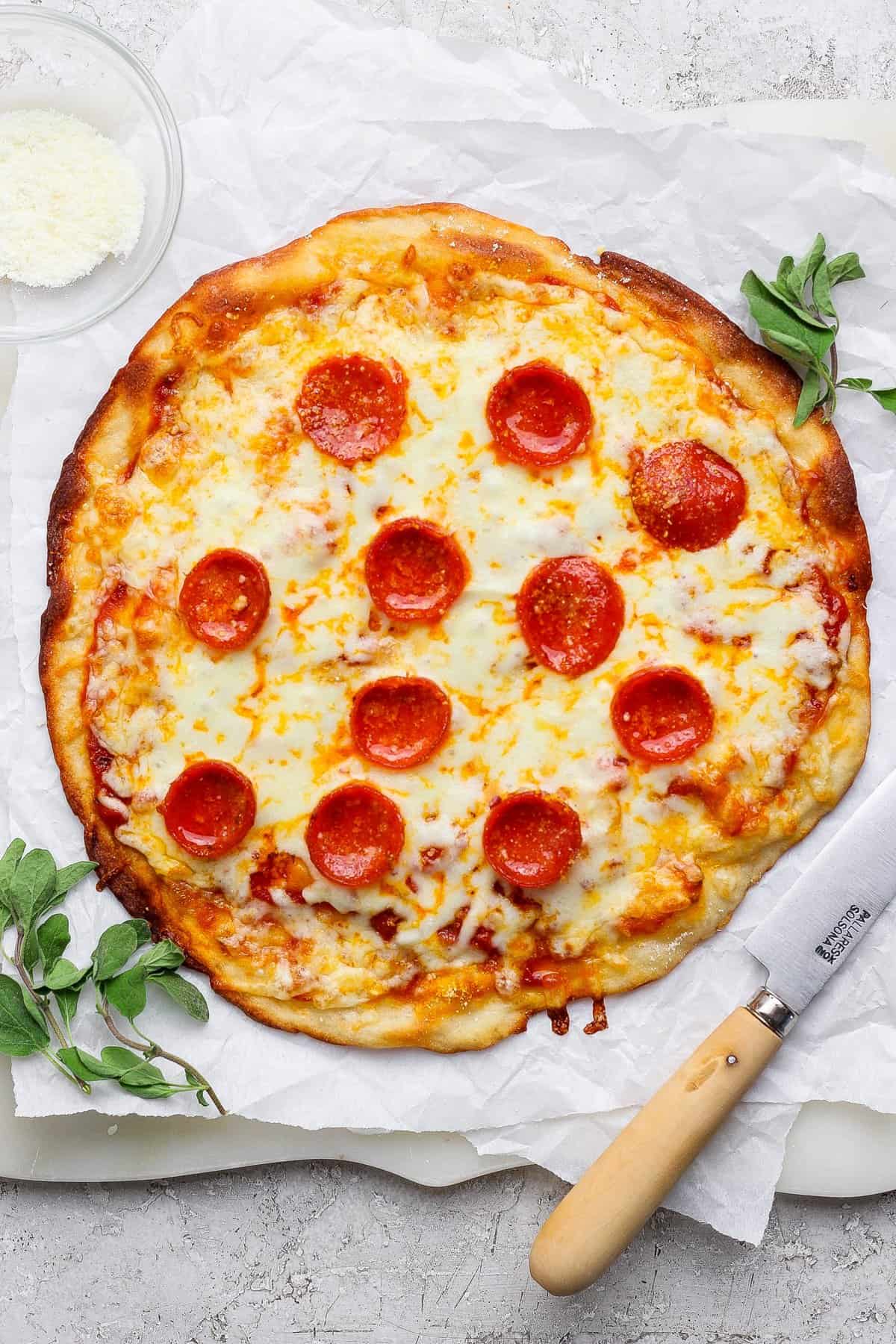
I keep this one simple in the recipe card with cheese and pepperoni, but top your pizza with whatever you like. Don’t forget a good pizza sauce, too. I always go homemade with my 4-ingredient pizza sauce.

try it!
Homemade Pizza Sauce
Our homemade pizza sauce comes together with just 4 ingredients. You’ll love it!
Store leftover unbaked pizza dough in the refrigerator for up to 3 days. To freeze, wrap the unbaked dough tightly in plastic wrap and place it in a resealable freezer bag. It will keep well for up to 2 months. Just make sure to thaw in the fridge overnight before using.
If you’ve already baked the crust (plain or fully topped), let it cool completely, then wrap slices tightly or store them in an airtight container in the fridge for 3-4 days.
I like reheating slices in a 375°F oven, toaster oven, or a hot skillet for a few minutes until the bottom crisps up again. This works especially well with cottage cheese crust, which can soften a bit after storing. It crisps right back up with dry heat.
Keep things simple on pizza night with sides that balance the crispy, cheesy crust and keep things fresh and fun. These are easy add-ons that pair well with a high-protein pizza crust:
- Arugula Salad: A peppery arugula salad with a balsamic vinaigrette adds freshness and a little bite that cuts through the richness of the pizza.
- Baked Sweet Potato Fries: These are one of my favorites on burger nights, but they’re perfect for dipping on pizza nights, too.
- Caprese Quinoa Salad: You’ll get even MORE protein with this salad, a combo of juicy tomatoes, mozzarella, fresh basil, and quinoa.
- Greek Salad: Crisp veggies, briny olives, and feta make this a classic, refreshing side that feels light but satisfying.
- Homemade Ranch Dressing: A cool, creamy ranch is great for drizzling over the pizza or serving on the side for dipping crusts or those sweet potato fries.
Love the idea of pizza + cottage cheese? Try my Cottage Cheese Pizza Bowl or Whipped Cottage Cheese Pizza Dip next!
Is cottage cheese pizza healthier than regular pizza?
Cottage cheese pizza can be a healthier option because it boosts protein without adding a lot of extra ingredients or prep. Higher protein can help keep you fuller longer, and using cottage cheese in the dough adds nutrients like calcium while still delivering a satisfying crust.
For even lighter swaps, my Cauliflower Pizza Crust recipe is another great alternative that cuts carbs and adds veggies. When I’m in the mood for a traditional pizza recipe, my Grandma Marie’s Homemade Pizza Dough is the best. It’s all about choosing the crust that fits the pizza night you have in mind.
Why should I choose cottage cheese over Greek yogurt or ricotta?
Cottage cheese is higher in protein than ricotta and Greek yogurt. I like using Greek yogurt, too, but it gives the crust a thinner, crispier texture. Cottage cheese makes it a bit chewier, which is perfect if you want a dough that feels substantial without being heavy.
Greek yogurt can also taste a little tart, depending on what you’re doing with the rest of the pizza. Cottage cheese has a more neutral flavor that won’t overpower your favorite toppings.
Can you make pizza sauce with cottage cheese?
Yes, cottage cheese can be blended into sauces to add creaminess and protein, though it’s usually better as a base for white-style pizza sauces rather than classic marinara. Blending it helps create a rich, creamy texture without needing heavy cream.
Does pizza dough typically contain eggs?
Traditional pizza dough doesn’t contain any eggs. It’s typically made with flour, water, yeast, salt, and sometimes oil. You generally won’t see eggs or egg whites in flatbread recipes, either. This no-rise dough is different because the protein-rich dairy replaces yeast.
If you’re looking to make a flourless or gluten-free version of this pizza crust, I haven’t tested those variations yet. It might work with alternatives like almond flour, oat flour, or a gluten-free all-purpose blend. You’d likely need to add large eggs or adjust the moisture to get the batter to hold together.
The texture may be a bit denser than the classic version, but it’s worth experimenting if you want a keto, gluten-free, or low-carb pizza option!
-
Preheat oven to 425°F. Spray a baking sheet with cooking spray. Set aside.
-
Place the flour, baking powder, salt, and blended cottage cheese (or yogurt) in a bowl.
-
Using a silicone spatula or wooden spoon, stir until combined.
-
Using your hands, press together until a ball is formed.
-
Transfer the dough to a floured work surface. Knead the dough until smooth. The dough should feel dry, not sticky.
-
Add more flour to the surface and the dough ball, and roll to form a thin crust about 10 inches round or ⅛ inch thick.
-
Transfer the crust to the prepared baking sheet. Place in the oven and bake for 10 minutes.
-
Remove the parbaked crust from the oven and top with pizza sauce, mozzarella cheese, parmesan cheese, and pepperoni.
-
Bake for 7-8 minutes, or until the crust begins to brown on the bottom.
-
Top with crushed red pepper and serve.
Cottage cheese vs. Skyr vs. Greek yogurt: It’s all delicious! Cottage cheese comes out a little chewier, while Greek yogurt pizza will have crispier edges. Skyr falls somewhere in between the 2 in terms of texture.
[adthrive-in-post-video-player video-id=”6fC9fejS” upload-date=”2025-02-28T00:00:00.000Z” name=”No-Rise Protein Pizza Dough (4 ingredients!)” description=”Have your pizza and protein boost too with this No-Rise Protein Pizza Dough! Crispy, chewy, and no-rise, no fuss — this pizza dough packs 20g of protein per serving, and is perfect for homemade pizza nights.”]
Calories: 344 kcal, Carbohydrates: 28 g, Protein: 20 g, Fat: 17 g, Fiber: 2 g, Sugar: 2 g
Nutrition information is automatically calculated, so should only be used as an approximation.
Photography by: The Wooden Skillet
Trending Products